



Learning objectives :
- Detect weak signals of disengagement, stress, overload and distress
- Addressing specific challenges or crises without stepping outside one’s role as a manager
- Adopt managerial behaviors that help prevent the risk of unhappiness
Course :
Session 1: Detecting Early Warning Signs
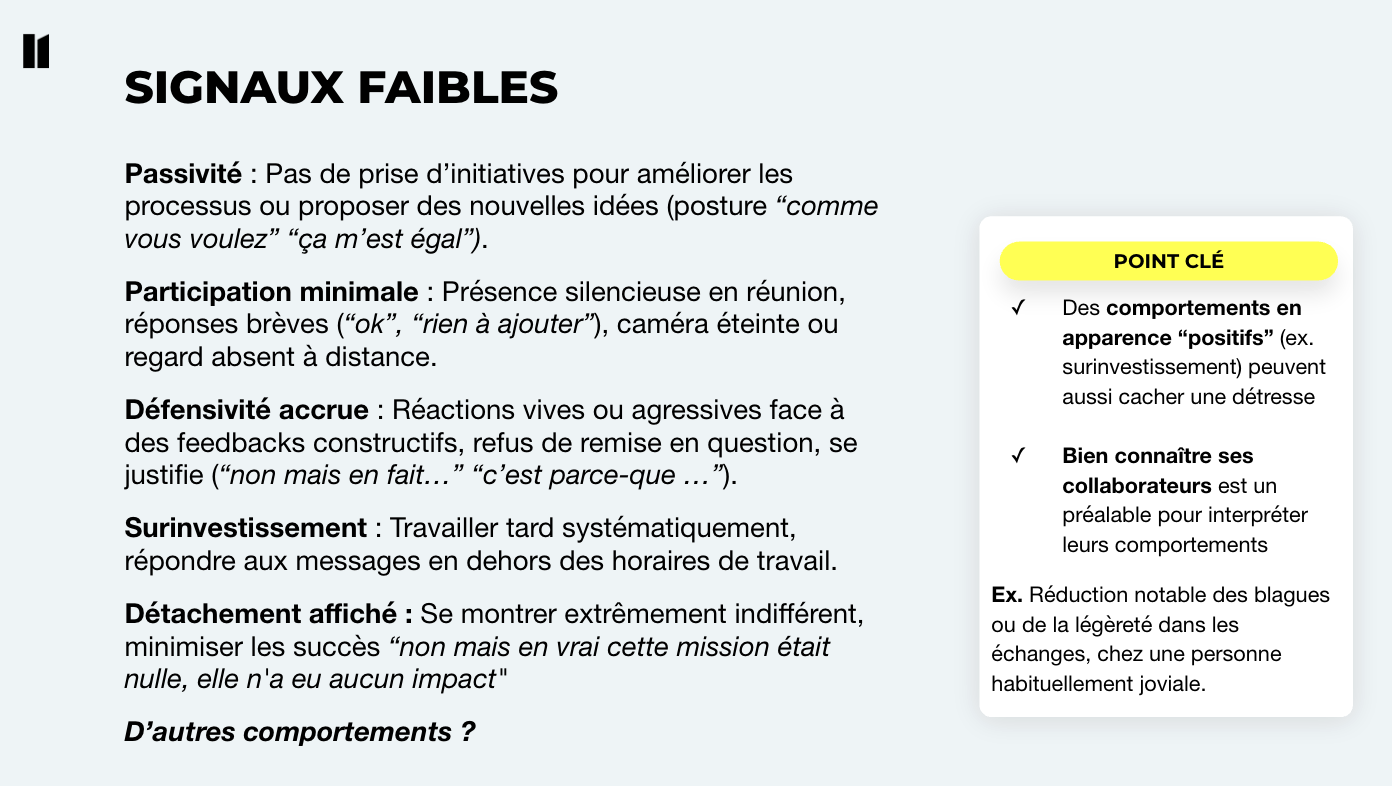
The first challenge managers face when dealing with their teams’ dissatisfaction is recognizing it early enough. Participants learn to identify behaviors that may serve as early warning signs, addressing a reality that is often overlooked: some warning signs are hidden behind seemingly positive behaviors, such as over-investment. Four categories of signals are reviewed: minimal participation (silence in meetings, camera off, brief responses), increased defensiveness (strong reactions to feedback, justifications), overcommitment (messages outside of working hours, presenteeism), and overt detachment (indifference, downplaying of collective issues).
Case Study : Practice identifying and categorizing observable behaviors as early warning signs—ranging from occasional stress to distress—while keeping in mind that interpretation always depends on your knowledge of the employee.
Session 2: Stepping In
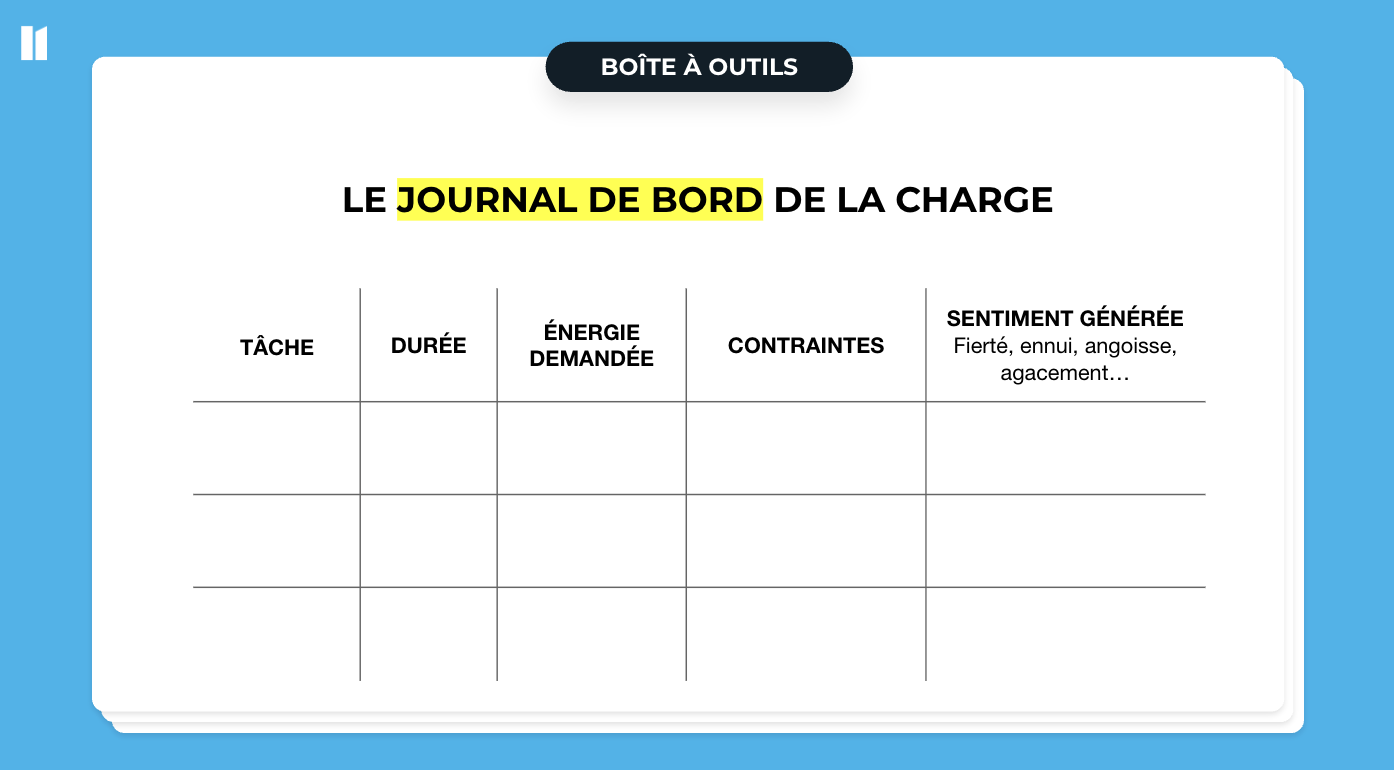
Once a warning sign is detected, how can one respond without overstepping one’s role? Participants practice responding appropriately depending on whether the situation involves short-term overload or deeper distress. The central tool is the Workload Log, structured around five dimensions: task, duration, energy required, constraints, and resulting feelings. It allows employees to step back and assess their assignments, measure their actual impact on their mental workload, and then prioritize tasks with their manager.
Case Study : Use the Workload Log to support an employee who is struggling, identify the tasks that require the most energy, and work together to define concrete adjustments.
Session 3: Prevention
Beyond one-off interventions, participants learn how to incorporate simple managerial routines that structurally reduce factors contributing to poor well-being. Two key tools are featured in this session: the "daily check-in," which creates a regular opportunity for everyone to share how they are feeling before starting work, and the incorporation of recovery time into the team’s schedule.
Case Study : Identify the routines to implement within your team and select those best suited to your context, taking into account the pace and profile of your team members.
When you leave this workshop, you'll know...
- Identify behaviors that indicate a problem, even when they take an unexpected form
- Respond appropriately based on the nature and severity of the situation, without stepping outside your role as a manager
- Establish simple routines to prevent health issues before they get worse
And it'll come in handy for...
- Ensuring sustained performance in your team
- Creating a calm and productive work environment where people want to work and want to join


.png)


.png)
.png)


