


Learning objectives :
- Choose the right communication channels for each situation and establish common guidelines for their use within your team
- Mastering written asynchronous communication channels and improving the quality of collaborative writing
- Adopt new forms of asynchronous communication (audio, video) to reduce unnecessary meetings
Course :
Session 1: Asynchronous by Default
Meetings remain the default choice, even though they are often not the best tool. Participants learn to break this habit: establishing common rules so that everyone knows which channel to use depending on the topic, and identifying all the situations where asynchronous communication is more effective than synchronous communication.
Case Study : Identify which of this week’s meetings could be replaced by an asynchronous channel, and draft the most appropriate alternative message for each situation.
Session 2: Writing and Getting Others to Write
In asynchronous communication, the quality of writing makes all the difference between a message that moves things forward and one that leads to a follow-up meeting. Participants explore best practices to improve their own written communication and that of their teams: the rules for effective communication, the method for turning an email into a collaborative workspace (links, clear sections, assignments), and the principles for improving the quality of a shared document.
Case Study : Analyze problematic written messages (emails, instant messages), identify what lacks clarity or actionability, and rewrite the message so that it is understood and acted upon without further communication.
Session 3: New Forms of Asynchronous Communication
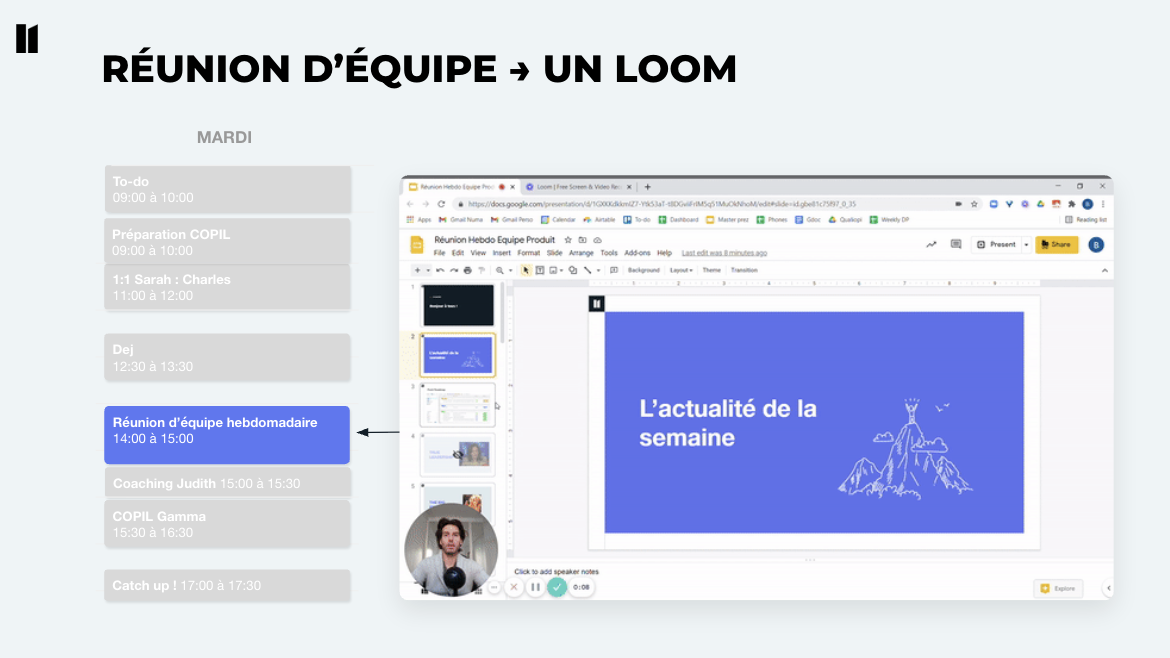
Asynchronous communication isn’t limited to text. Participants explore non-written techniques (voice messages, Loom-style video recordings) that allow them to convey a message with more nuance and less effort than a written text, and that are better suited for moments when energy is low or for topics that are complex to explain verbally.
Case study : Identify specific situations during your week where a voice message or a Loom video could have replaced an information-sharing meeting or a long summary email, and practice creating one.
When you leave this workshop, you'll know...
- Identify the most appropriate channels for each situation and ensure your team adopts them
- Produce clear, actionable documentation that reduces unnecessary back-and-forth
- Use asynchronous audio and video tools to hold fewer meetings without compromising the quality of communication
And it'll come in handy for...
- Manage your time more effectively and reduce the mental load caused by interruptions and meetings
- Improve the quality of asynchronous communication and reserve in-person meetings for those that truly warrant them


.png)


.png)
.png)


