


Learning objectives :
- Detect weak signals of disengagement, stress, overload and distress
- Intervene in cases of temporary difficulty or distress
- Adopt managerial behaviors that help prevent the risk of unhappiness
Course :
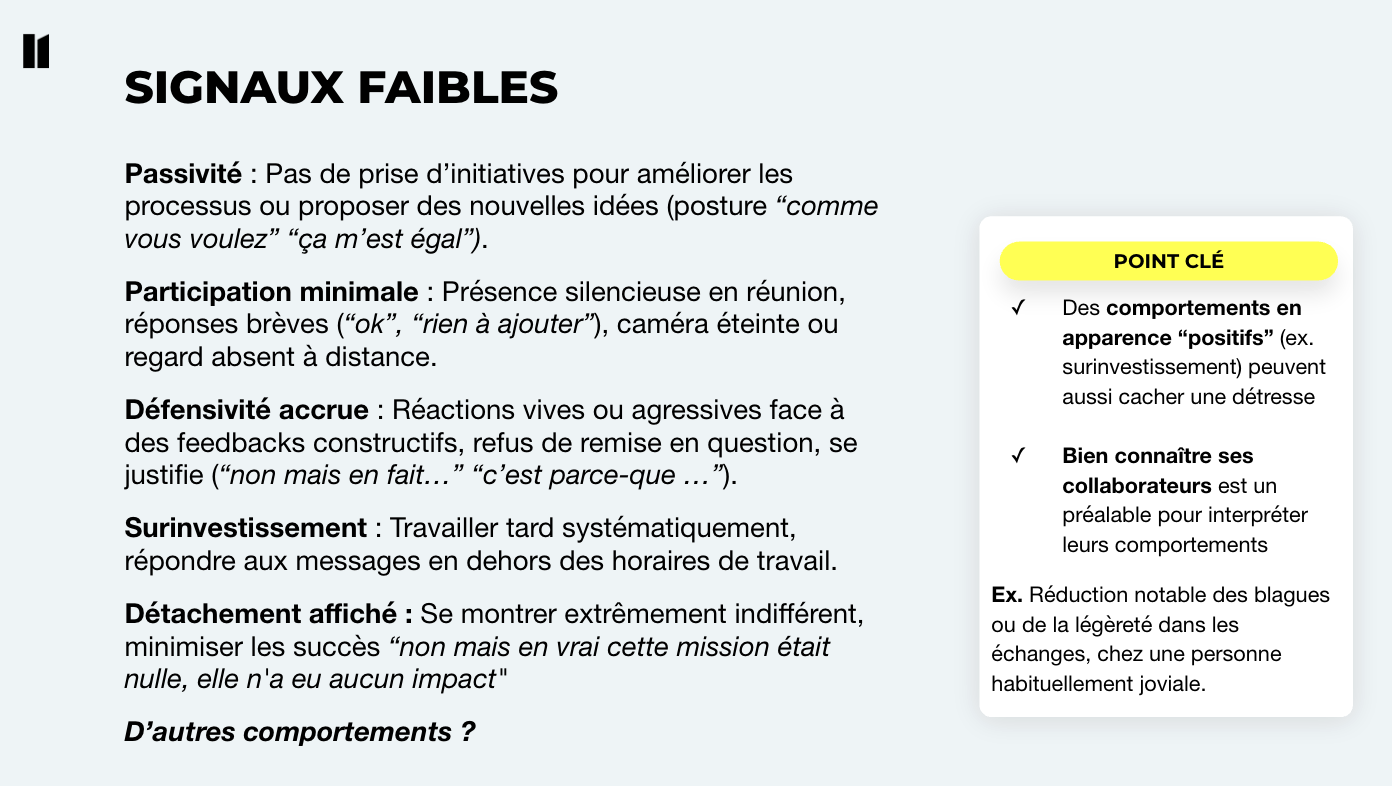
- Detecting weak signals
Example of a tool : practice recognizing behaviors that may be weak signals of more or less serious difficulties: from occasional overload to distress
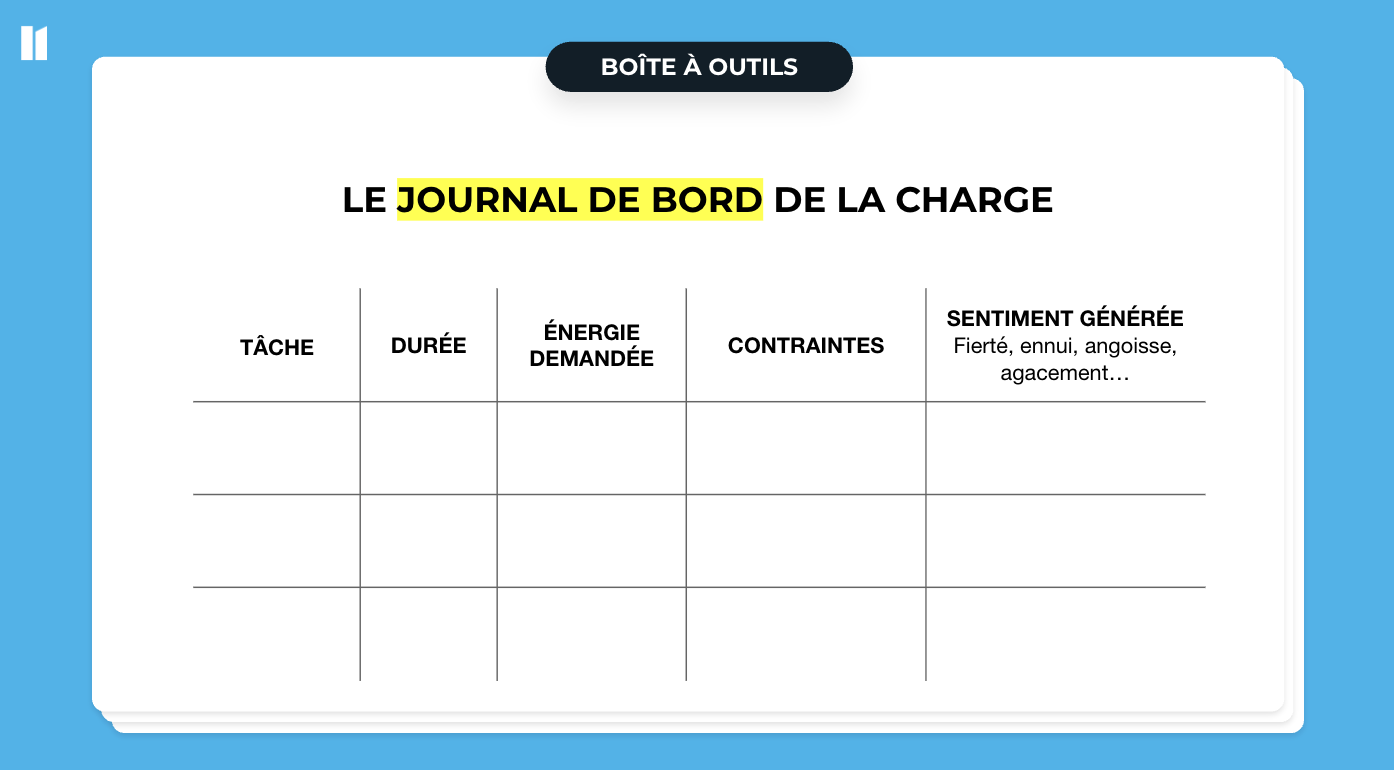
- Intervening in cases of short-term overload and long-term distress
Example of a tool : the workload diary, which enables you to take a step back from your tasks and prioritize according to their importance and impact on your mental workload.
- Prevent: adopt routines that reduce factors of ill-being
Example of tool: the day's weather, introducing recovery times, ....
When you leave this workshop, you will know :
- Detect weak signals of disengagement, stress, overload and distress
- Intervene in cases of temporary difficulty or distress
- Adopt managerial behaviors that help prevent the risk of unhappiness
This will help you to :
- Ensuring sustainable performance
- Build a serene and productive team, in which you want to work... and that you want to join.
Extracts


.png)


.png)
.png)


