



Learning objectives :
- Understanding the four styles of situational leadership and identifying which one comes most naturally to you
- Choose the right approach based on each employee’s skill level and motivation
- Adapt your approach even in complex cases where the right course of action is not obvious
Course :
Session 1: Navigating Different Leadership Styles
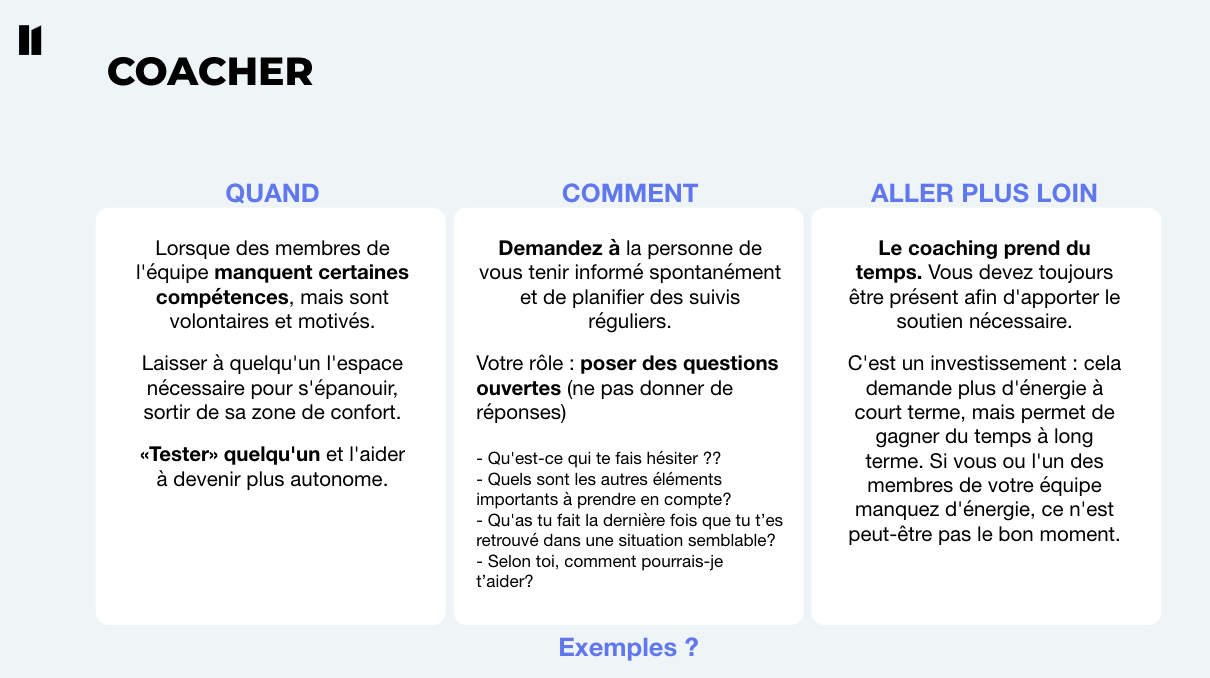
A good manager doesn’t have just one style: they know how to adapt their approach depending on the situation and the person. But everyone has a “natural” style that they default to, even when it’s not the most appropriate. This session introduces the four styles and helps participants identify their dominant style and its limitations.
Case Study : Identify your natural leadership style, the situations where it is appropriate and those where it creates friction, and then practice formulating an approach in a style that is less natural to you using a specific example.
Section 2: Choosing the Right Approach
Knowing the four styles is one thing. Knowing which one to apply to which employee on which assignment—that’s where situational leadership comes into play. The Competence x Motivation Matrix is the key tool that enables this decision-making process.
Case Study : Apply the matrix to several actual employees working on current projects, determine whether the current management style is suitable for each individual, and decide what adjustments to make in the most challenging situations.
Session 3: Adapting Your Approach in Complex Situations
In real life, the right approach isn’t always clear: a competent team member on a project, but within an organizational context where autonomy is risky. A context that calls for delegation, but where external factors force the manager to take back control. This session trains participants to navigate these ambiguous situations.
Case Study : When faced with a situation where the right leadership style isn’t immediately clear, decide between coaching and making a decision, between supporting and delegating, justifying your choice using the tools discussed, and discussing disagreements with other participants to refine your judgment.
When you leave this workshop, you'll know...
- Identify your natural leadership style and its limitations in each managerial situation
- Choose the appropriate level of supervision and autonomy based on each employee's profile
- Adapt your approach in complex situations without falling back on your usual style
And it'll come in handy for...
- Accelerate your employees' skill development and growth toward greater independence
- Avoid the two classic pitfalls: micromanagement and letting go too soon
- Be a more flexible, transparent, and effective manager depending on the situation

.png)


.png)


.png)
.png)


